
Fireplaces
Wood-to-Gas Fireplace Conversion
Converting a wood-burning fireplace to gas trades hauling and cleaning for the turn of a switch. It usually means installing a gas log set or a gas insert, running or connecting a gas supply, and confirming the chimney and venting suit the new setup. The right conversion depends on your fireplace, your goals, and what your chimney can support.
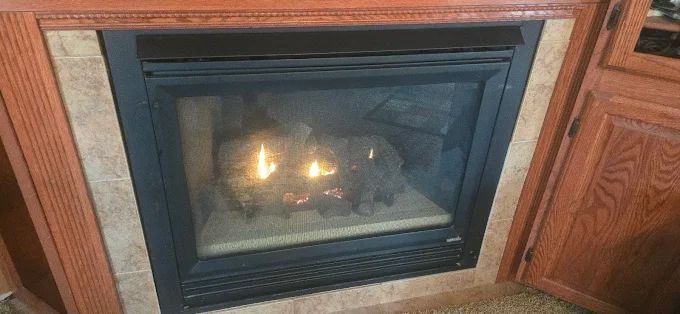
What a conversion can look like
There are a few paths. A gas log set placed in the existing firebox keeps the open-fireplace look with gas convenience. A gas insert is a sealed unit fitted into the firebox that is more efficient as a heat source. Each has different requirements for venting, gas supply, and the condition of the existing chimney.
Choosing between them comes down to whether you want ambiance, heat, or both, and what your fireplace and flue can accommodate.
What has to be confirmed first
A conversion is a system change, which is exactly the situation that calls for a closer inspection. We confirm the firebox and flue condition, the venting, and the gas supply before recommending an approach, because connecting gas to a chimney that is not sound is not something to do on assumption.
We are honest about what your existing fireplace can support and which option fits. Any relining that the new appliance requires, and any code or permit requirements, are determined for the property.
Living with a gas fireplace
After conversion, upkeep shifts from sweeping creosote to periodic gas service, checking the burner, sensors, glass, and venting so the unit lights reliably and burns cleanly. It is less maintenance overall than wood, but not zero, and the venting still needs to stay clear and intact.
Consider converting to gas if you want
- To stop hauling and cleaning up wood
- Fire at the turn of a switch
- A cleaner-burning fireplace
- The open-fireplace look with gas logs
- More efficient heat with a gas insert
- Lower overall maintenance
A conversion involves
- Confirming firebox and flue condition
- Checking venting and gas supply
- Choosing between gas logs and a gas insert
- Any relining the new appliance requires
- Installing and adjusting the chosen system
- Any code and permit requirements for the property
Serving St. Louis & Kansas City
We provide wood-to-gas fireplace conversion across both of our home regions — the St. Louis metro, including the Metro East communities in Illinois, and the Kansas City metro on both the Missouri and Kansas sides — generally within about 65 miles of each city. Wherever you are, the approach is the same: we look at the actual system on site, explain what we find in plain terms, and lay out the options before any work begins. We use cautious, honest language about what we can and can't determine, and we don't quote a price or promise a fix for a problem we haven't assessed in person. Each metro has its own direct phone number, so you always reach the right place, and we're available around the clock to take your call and get you on the schedule.
The work depends on the specific appliance and fuel, whether parts are available for the unit, the condition of the venting, and whether the system is a good candidate for the change you have in mind — all confirmed on site.
Keeping ahead of it
Most no-heat calls in the cold months trace back to deferred service. A periodic check of the burner, sensors, glass, gaskets, and venting keeps a fireplace lighting on the first try and running cleanly, and keeps an outdoor unit shedding water rather than soaking it up. If you ever smell gas, leave the unit off and ventilate — that isn't a wait-and-see situation, and it's worth a prompt call.
Questions
Wood-to-Gas Fireplace Conversion FAQs
Is it better to install gas logs or a gas insert?
Logs preserve the open-fireplace look with convenience; an insert is a sealed unit that provides more efficient heat. The best choice depends on your goals and what your fireplace supports.
Can any wood fireplace be converted to gas?
Many can, but it depends on the firebox, flue condition, venting, and gas access. We confirm your fireplace is a suitable candidate before recommending a conversion.
Will I still need my chimney cleaned after converting?
Gas produces far less creosote, but the venting still needs periodic checking for blockage and integrity. Upkeep changes rather than disappears.
Do you service both St. Louis and Kansas City?
Yes. This is one of the services we provide across both the St. Louis and Kansas City metro areas, each with its own direct phone number. Call the number for your area and we'll take it from there.
St. Louis metro
Wood-to-Gas Fireplace Conversion near St. Louis
Available across the St. Louis service area, including:
Kansas City metro
Wood-to-Gas Fireplace Conversion near Kansas City
Available across the Kansas City service area, including:
24/7 service
Need wood-to-gas fireplace conversion? Let’s talk.
Choose your area and we’ll take it from there. Available 24/7.
Get in touch
Request wood-to-gas fireplace conversion
Tell us about your chimney or fireplace and the best number to reach you. Full name, phone, and ZIP are required.
- Available 24/7 to take your call and schedule a visit.
- We assess the system on site and explain options before any work.
- Serving the St. Louis and Kansas City metro areas.