
Repair & waterproofing
Chimney Leak Repair
A chimney leak shows up as a stain on the ceiling, a musty smell, or water around the firebox, but the entry point is almost never where the water appears. Fixing a leak means finding the true source and correcting it, because sealing the wrong spot leaves the water free to keep coming in somewhere else.
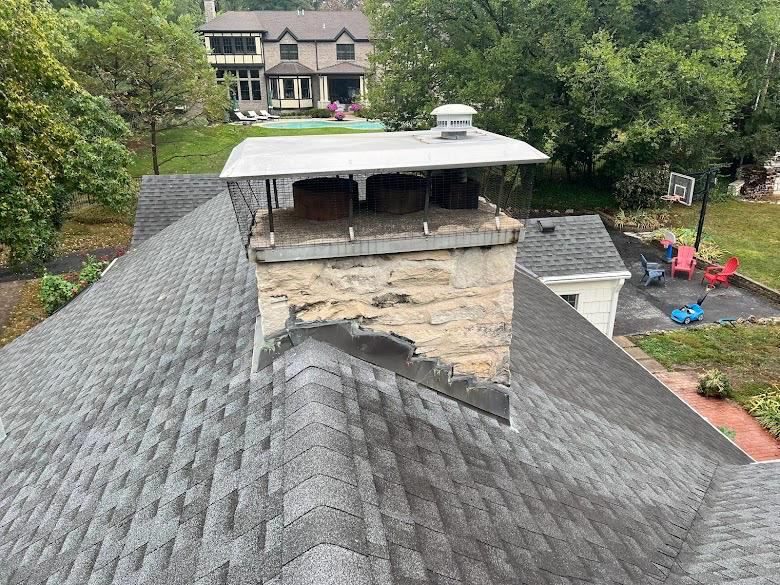
Where chimney water usually gets in
The common culprits are a cracked or undersized crown at the top, failed or improperly formed flashing where the chimney meets the roof, deteriorated mortar joints and porous brick that soak up rain, a missing or damaged cap letting water straight down the flue, and worn chase covers on prefab chimneys. Often more than one of these is contributing at once.
Because brick and mortar are naturally absorbent, a chimney can leak without any single dramatic crack, simply from years of water soaking into the masonry.
How a leak is traced and corrected
We work from the symptom back to the source, examining the crown, flashing, cap, mortar, and chase cover, and considering how water travels once it is inside. The correction follows the finding: crown repair, flashing work, tuckpointing, a new cap or chase cover, waterproofing, or a combination.
We are candid about what we found and where water is entering. If a leak has more than one cause, we say so rather than sealing one spot and calling it solved.
Why leaks are worth catching early
Water inside a chimney does quiet damage: it rusts dampers and metal components, breaks down mortar from within, stains and rots adjacent framing and drywall, and accelerates freeze-thaw spalling. A leak that seems minor in autumn can widen over a freezing winter. Addressing the source early usually keeps the repair smaller.
Signs of a chimney leak
- Ceiling or wall stains near the chimney
- A musty or damp smell around the fireplace
- Water or moisture in the firebox
- White mineral staining on the brick
- A rusted damper or firebox components
- Leaks that appear only during heavy, wind-driven rain
Tracing and correcting a leak can involve
- Examining the crown, flashing, cap, mortar, and chase cover
- Identifying the true entry point, not just the stain
- Crown repair where the top is cracked
- Flashing correction at the roof joint
- Tuckpointing porous or open joints
- A new cap or chase cover, and waterproofing
Serving St. Louis & Kansas City
We provide chimney leak repair across both of our home regions — the St. Louis metro, including the Metro East communities in Illinois, and the Kansas City metro on both the Missouri and Kansas sides — generally within about 65 miles of each city. Wherever you are, the approach is the same: we look at the actual system on site, explain what we find in plain terms, and lay out the options before any work begins. We use cautious, honest language about what we can and can't determine, and we don't quote a price or promise a fix for a problem we haven't assessed in person. Each metro has its own direct phone number, so you always reach the right place, and we're available around the clock to take your call and get you on the schedule.
The scope of a repair depends on what has actually failed and how far the damage extends, how the chimney is built and how easily it can be accessed, and whether water has been getting in long enough to affect more than the visible area.
Keeping ahead of it
Repairs tend to be smaller when they're caught early. A minor crown crack, a bit of open joint, or a slightly rusted cap is far more contained than the spalled brick, interior leaks, and larger rebuilds that follow seasons of unaddressed water. A yearly look is the reliable way to catch these while they're small.
Questions
Chimney Leak Repair FAQs
I only see the leak when it rains hard. Is that normal?
Yes. Wind-driven rain often reveals leaks that a light shower does not, which is one reason locating the true entry point takes a careful look rather than a guess.
Will waterproofing alone stop my leak?
Only if absorption through the masonry is the actual source. If the crown, flashing, or cap is the entry point, those must be corrected first; waterproofing then helps protect the brick.
Can a leak damage more than the chimney?
Yes. Left alone, chimney water can reach framing, insulation, and ceilings, so tracing and stopping it protects the surrounding structure too.
Do you service both St. Louis and Kansas City?
Yes. This is one of the services we provide across both the St. Louis and Kansas City metro areas, each with its own direct phone number. Call the number for your area and we'll take it from there.
St. Louis metro
Chimney Leak Repair near St. Louis
Available across the St. Louis service area, including:
Kansas City metro
Chimney Leak Repair near Kansas City
Available across the Kansas City service area, including:
24/7 service
Need chimney leak repair? Let’s talk.
Choose your area and we’ll take it from there. Available 24/7.
Get in touch
Request chimney leak repair
Tell us about your chimney or fireplace and the best number to reach you. Full name, phone, and ZIP are required.
- Available 24/7 to take your call and schedule a visit.
- We assess the system on site and explain options before any work.
- Serving the St. Louis and Kansas City metro areas.