
Chimney Tuckpointing vs. Masonry Repair: What Is the Difference?
Learn the difference between chimney tuckpointing and masonry repair, why mortar joints matter, and how an on-site assessment determines the right scope.
Chimney Repairs & Moisture
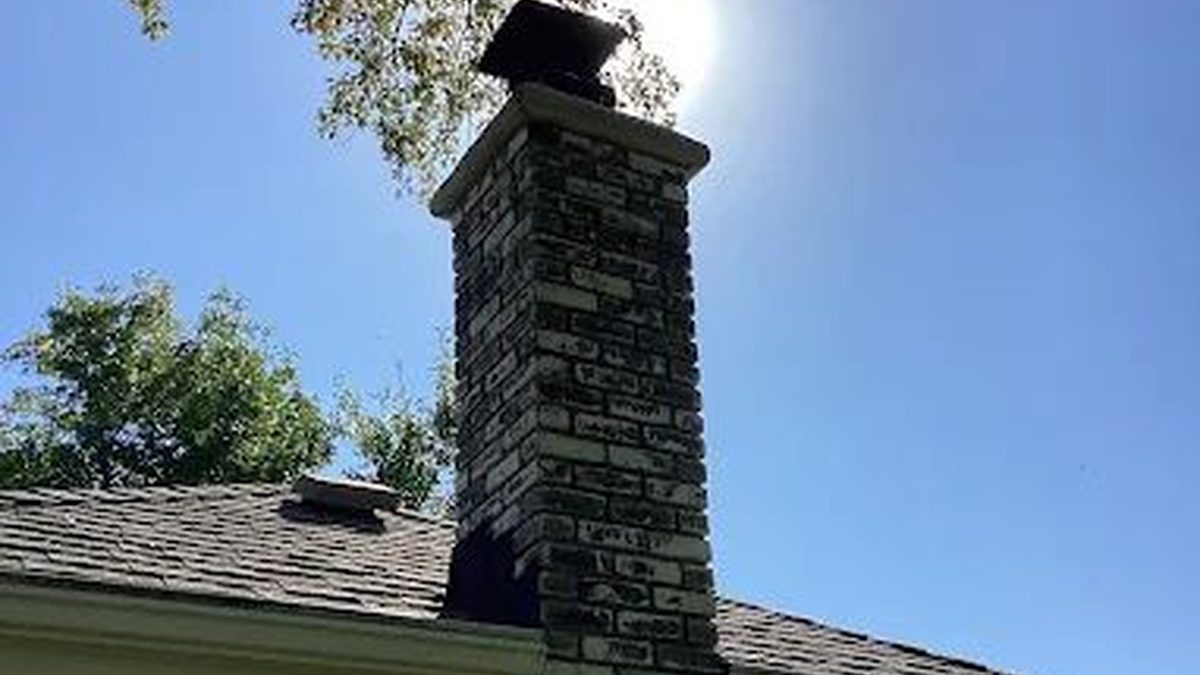
Brick and mortar are durable materials, but they are not immune to weather. When moisture enters small openings in masonry and temperatures move above and below freezing, the materials can be exposed to repeated stress. Over time, that can contribute to cracks, deteriorated mortar, flaking brick, and other changes that deserve attention.
Missouri homeowners do not need to inspect a chimney after every cold morning. The useful approach is to watch for patterns over seasons: mortar that is becoming loose, brick faces that are breaking down, water stains after rain, rust marks below metal components, or areas that look different from one year to the next.
Water can enter through open mortar joints, cracked crowns, damaged caps, deteriorated flashing, porous surfaces, or other exposed areas. It can also be held against the chimney when drainage is poor or when a component above the masonry is no longer directing water away effectively.
The key point is that masonry damage often has a water story behind it. Repairing a joint or replacing one brick can be appropriate, but a complete evaluation also asks why the material was exposed to moisture in the first place.
Homeowners may notice crumbling mortar, small fragments of brick, cracking, a rough or flaking surface, white mineral-like residue, or staining below the crown or cap. These visible clues can have more than one cause, but they are worth documenting.
If a brick face is breaking down, do not scrape aggressively or apply a random coating to hide it. A surface treatment can make the appearance change without addressing the reason moisture is affecting the masonry. A technician needs to consider the accessible brick, joints, crown, cap, and water-management components together.
Age alone does not make a chimney unsafe or in need of replacement. Older masonry can perform well when it has been maintained and repaired appropriately. But older chimneys may also have prior patching, material changes, or weather exposure that make a one-size-fits-all repair a poor choice.
That is why chimney masonry and brick repair should be based on what is observed in the particular chimney. The aim is to preserve sound material where practical and address the areas that are actually deteriorated.
Prevention starts with sound components. A crown that sheds water, a properly fitted cap, effective flashing, maintained mortar, and appropriate moisture protection where suitable all work together. If an exterior inspection identifies one weak point, the technician should explain whether it is likely to affect nearby components and which repairs should be prioritized.
Chimney waterproofing may be part of a long-term plan for suitable masonry, but it is not a substitute for repairing direct entry paths or deteriorated material. The condition needs to guide the sequence.
Observe from the ground, take photos of changes, and keep gutters and roof drainage from directing water toward the chimney where possible. Do not pressure-wash brick, scrape loose material from a ladder, or apply a sealant without understanding how it will affect the masonry.
If you find loose pieces on the ground, a new crack, or water after a storm, schedule an evaluation before the next season adds more exposure. Earlier information often creates more repair options than waiting until a small visible condition has spread.
No. Cracking and masonry wear can have several causes, including age, movement, moisture, material condition, and prior repairs. Freeze–thaw exposure is one factor that can add stress when water is present.
No. Moisture protection may be appropriate after source repairs and masonry work, but it does not replace deteriorated mortar, loose brick, a damaged crown, or a flashing problem.
Arrange an evaluation when you notice new or increasing flaking, loose pieces, open joints, water stains, or changes around the chimney top. The sooner the condition is understood, the easier it is to plan the right scope.
For Missouri masonry that is showing weather-related wear, Mister Chimney can help identify the accessible condition and prioritize repairs. Request chimney masonry and brick repair for an explanation grounded in your chimney—not a generic patch.
How we can help
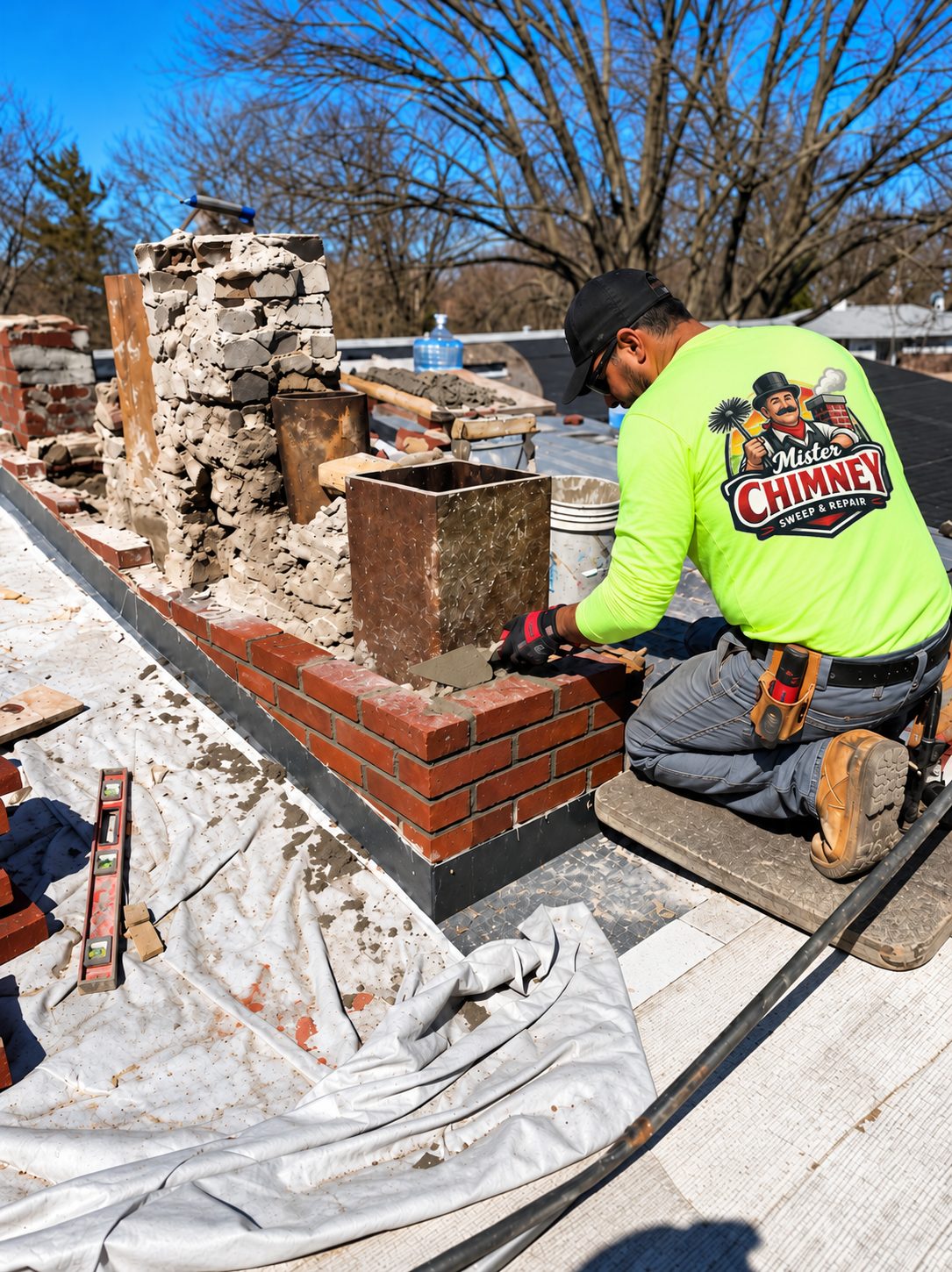
Rebuilding and restoring the brick and stone that make up the chimney structure.
Learn about Chimney Masonry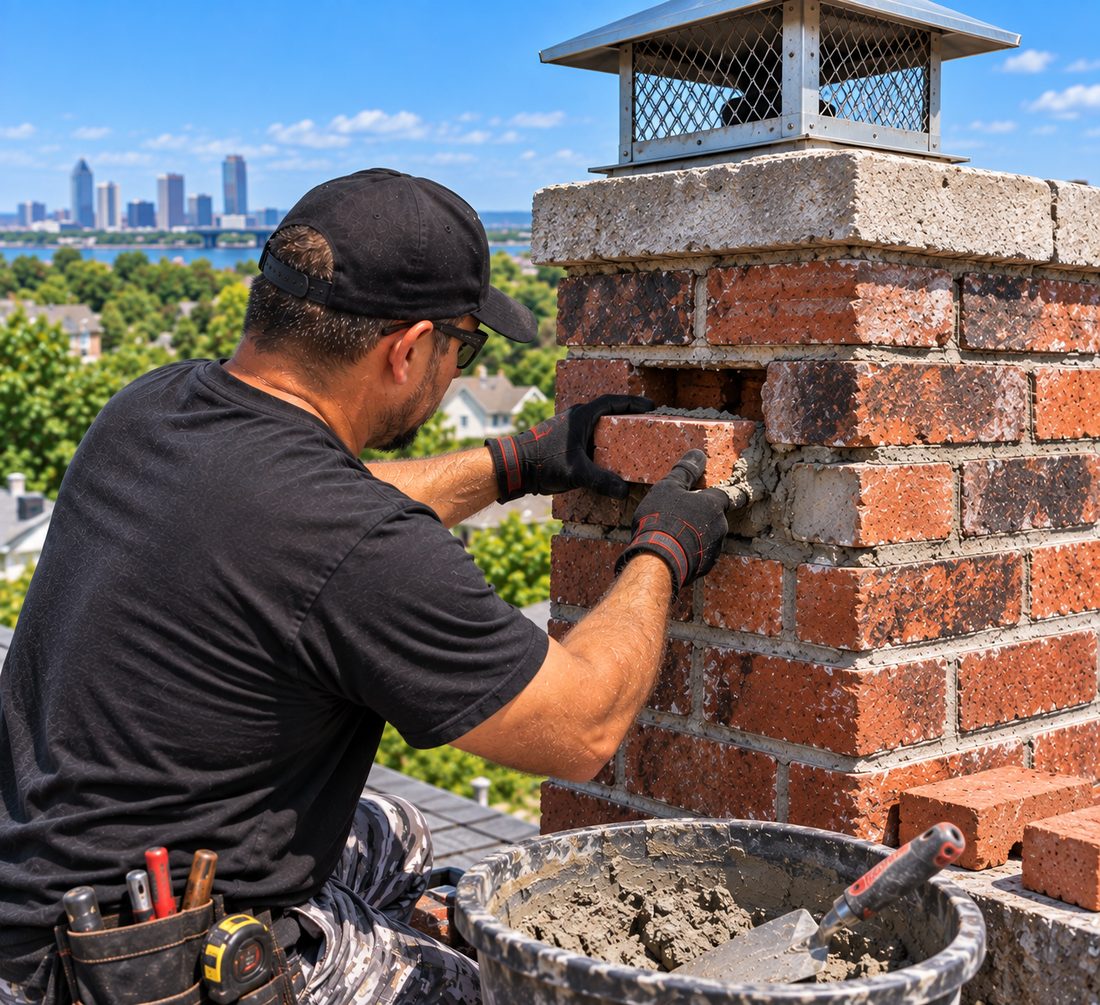
Diagnosing and correcting the specific problem, from a leak to failing masonry.
Learn about Chimney Repair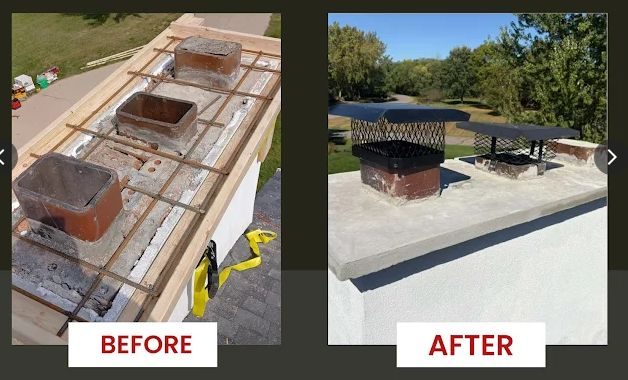
Repairing or rebuilding the top slab that sheds water off the chimney.
Learn about Chimney Crown RepairKeep reading
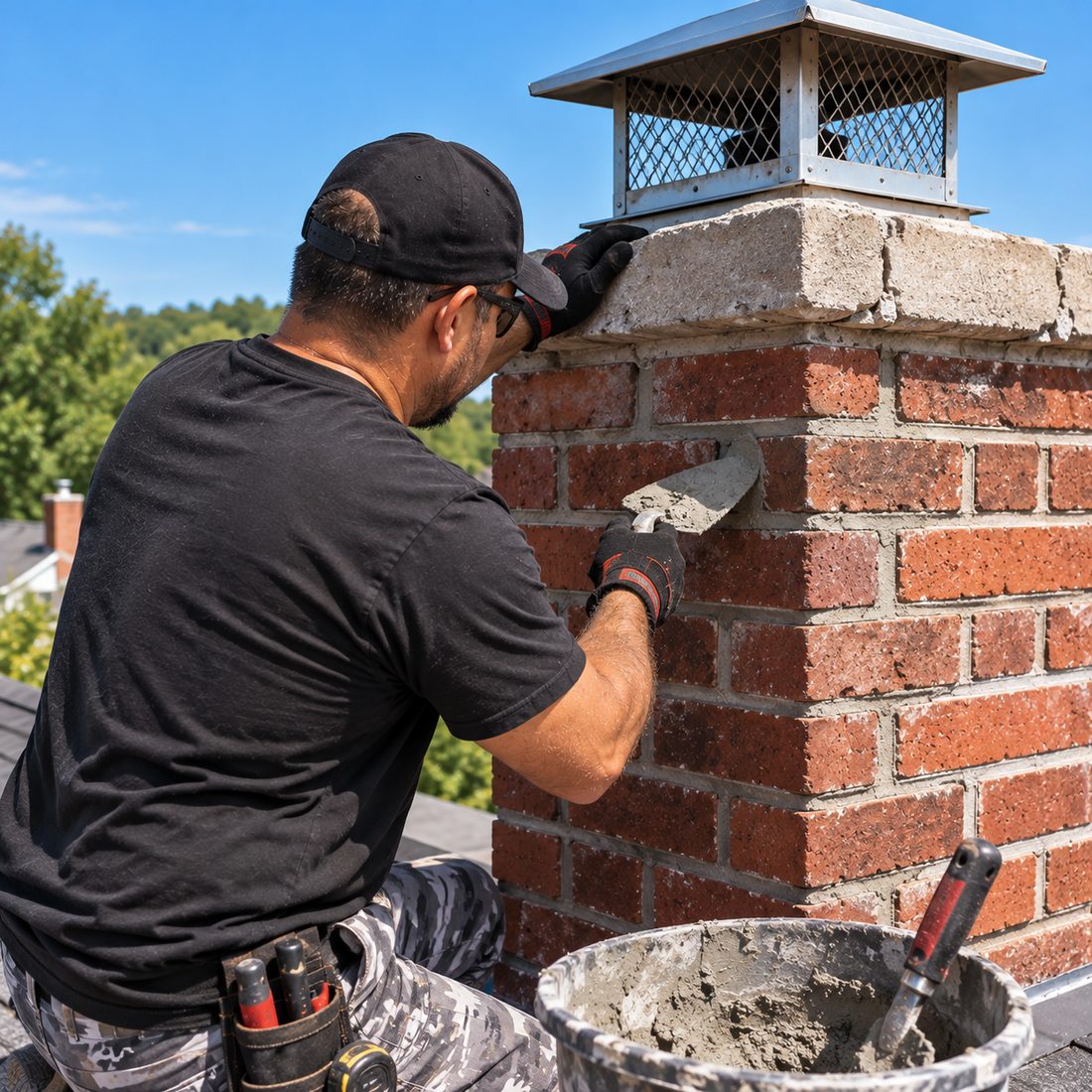
Learn the difference between chimney tuckpointing and masonry repair, why mortar joints matter, and how an on-site assessment determines the right scope.
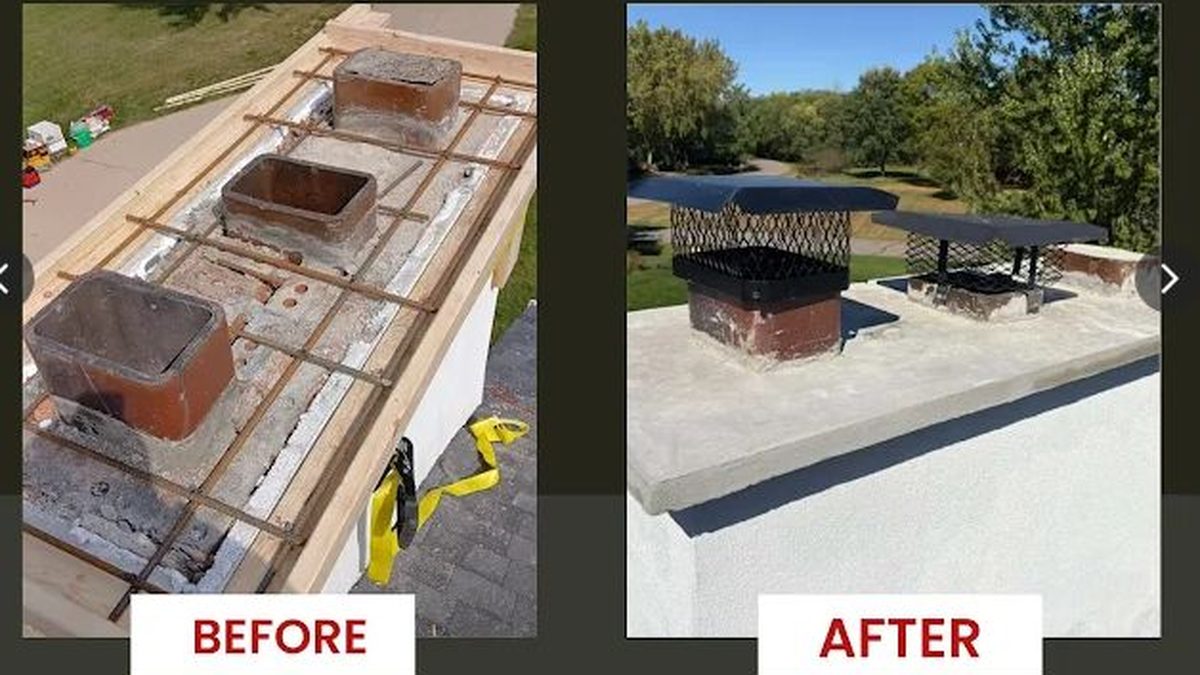
Learn why chimney crown cracks matter, what homeowners can observe safely, and how condition-based crown repair helps manage water exposure.
Learn what to watch for on an older St. Louis brick chimney, including mortar wear, water exposure, crown condition, flashing, and when to schedule a masonry evaluation.
Get in touch
Tell us about your chimney or fireplace and the best number to reach you. Full name, phone, and ZIP are required.