
How to Find the Source of a Chimney Leak
Learn why chimney leaks can be difficult to trace, what homeowners can safely observe, and how a condition-focused evaluation identifies the likely source.
Chimney Repairs & Moisture
An odor from the fireplace after rain is easy to dismiss because it may fade when the weather clears. But the pattern itself is useful information. If a smell appears after a storm, during humid weather, or when wind changes direction, it may be connected to moisture, airflow, debris, or the condition of the chimney’s exterior components.
The smell does not identify one exact repair. That is why it is better to notice the pattern and arrange a condition-focused evaluation than to cover it with air freshener, light a fire to “burn it out,” or assume it is only a normal fireplace odor.
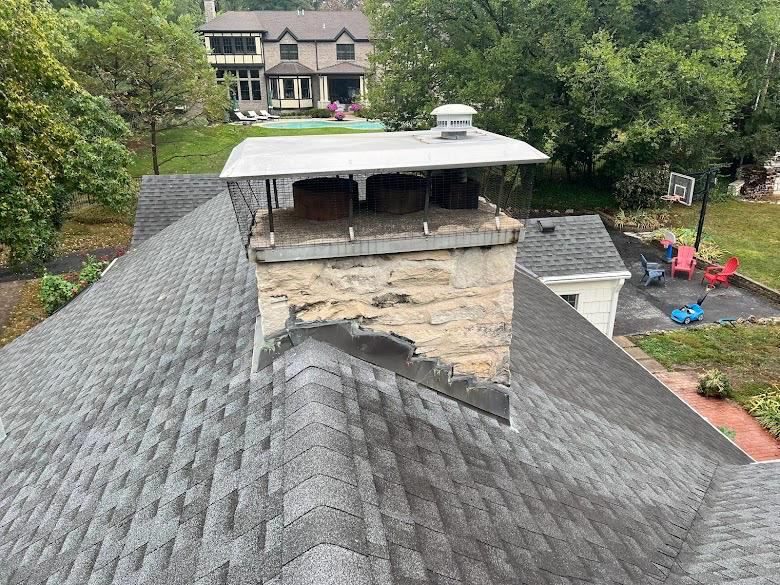
Chimneys are exposed to weather at the roofline. Water can enter or affect the system through a damaged crown, worn flashing, missing or deteriorated cap, rusted chase cover, porous masonry, or another exterior condition. Even when water does not visibly drip into the firebox, moisture can interact with soot, creosote, debris, or masonry and create an odor that becomes noticeable inside the home.
Rain can also change air pressure and airflow around the chimney. A system with a draft concern may move odors differently during wet or windy weather. That is one reason two homes can have a similar fireplace smell but need different solutions.
Make note of when the odor appears. Is it only after heavy rain, or after any humidity? Does it come from a wood-burning fireplace, gas fireplace, stove, or unused chimney? Is there visible staining on the wall or ceiling nearby? Has the chimney had recent roof work? Do you see loose mortar, a rusted metal component, or debris in the firebox?
Photos taken after rain can be useful, especially if they show a water mark, exterior staining, damaged cap, or something that changes over time. Do not climb on the roof to investigate. A roof-level condition can be difficult to interpret and may not be safe to reach without proper access.
Some homeowners try to remove a damp or smoky smell by using the fireplace. That can hide the symptom temporarily without addressing the reason it appeared. If the odor is accompanied by smoke in the room, a draft change, visible water, or falling debris, stop using the fireplace until it is evaluated.
The concern might turn out to be routine maintenance. It might point to a chimney cap installation and repair need, chimney flashing repair, masonry work, or a separate airflow issue. The correct step depends on what is found, not on the strength of the odor alone.
Masonry, mortar, metal, liners, and wood framing around a chase can react differently to repeated moisture exposure. Freezing and thawing, wind-driven rain, and long periods of damp weather can add to the wear on exterior components. That does not mean every damp odor is a major structural problem, but it is a reason to look beyond the fireplace opening.
At Mister Chimney, an evaluation begins with the homeowner’s observation, then moves through accessible fireplace and exterior components. The aim is to find the most likely source of the concern, explain what is visible, and recommend only work that fits the condition.
If the smell returns, write down the date, type of weather, and where it was strongest. Note whether the fireplace had been used recently. A short record makes it easier to distinguish a one-time event from a repeating pattern, and it helps the technician ask better questions on site.
Avoid applying sealants, paint, or odor products inside the fireplace as a first response. Surface treatments can obscure evidence without solving a moisture path or a ventilation concern.
No. Moisture can be part of the issue, but airflow, debris, soot, creosote, and the condition of different components can also influence the smell. An on-site evaluation is the way to determine what should be checked.
A properly selected and installed cap may help protect an opening from rain and debris, but it is not a universal answer. Crown, flashing, masonry, chase-cover, and draft conditions may also need to be considered.
If the odor is new, persistent, or paired with smoke, water, or a change in performance, avoid using the fireplace until it can be reviewed. Do not assume a fire will correct the underlying condition.
If your fireplace odor appears after rain in St. Louis or Kansas City, request a chimney leak repair evaluation with Mister Chimney. We will review the accessible system and explain what may be contributing to the concern.
How we can help
Finding where water is entering and correcting the actual source, not just the stain.
Learn about Chimney Leak Repair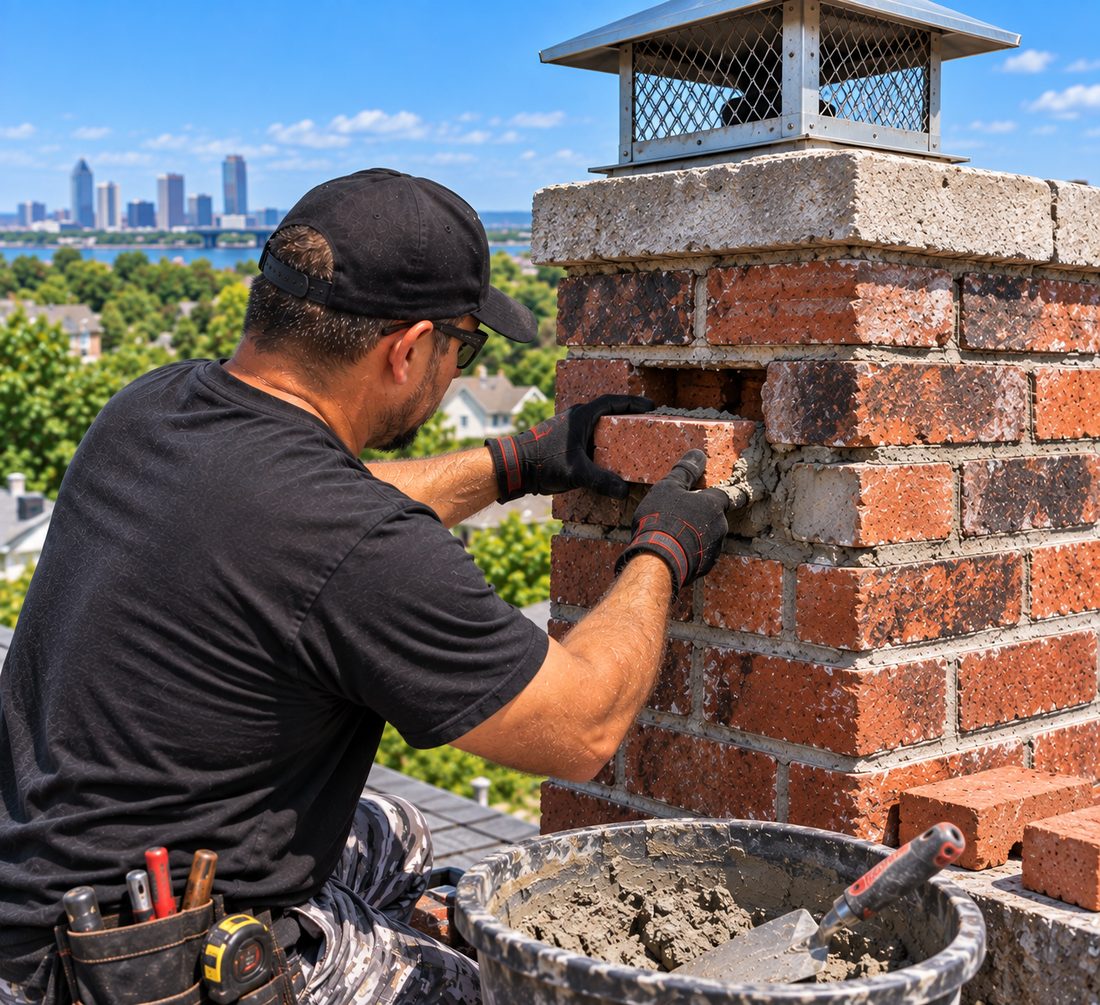
Diagnosing and correcting the specific problem, from a leak to failing masonry.
Learn about Chimney Repair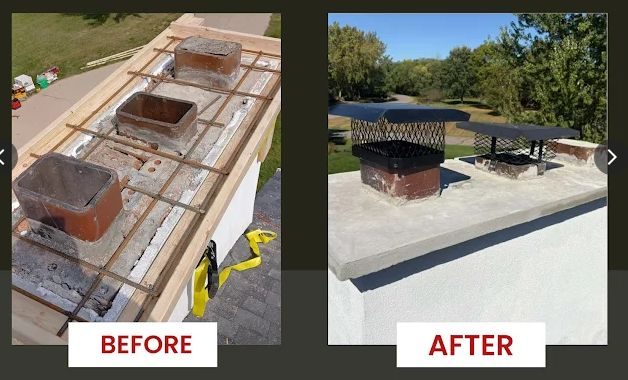
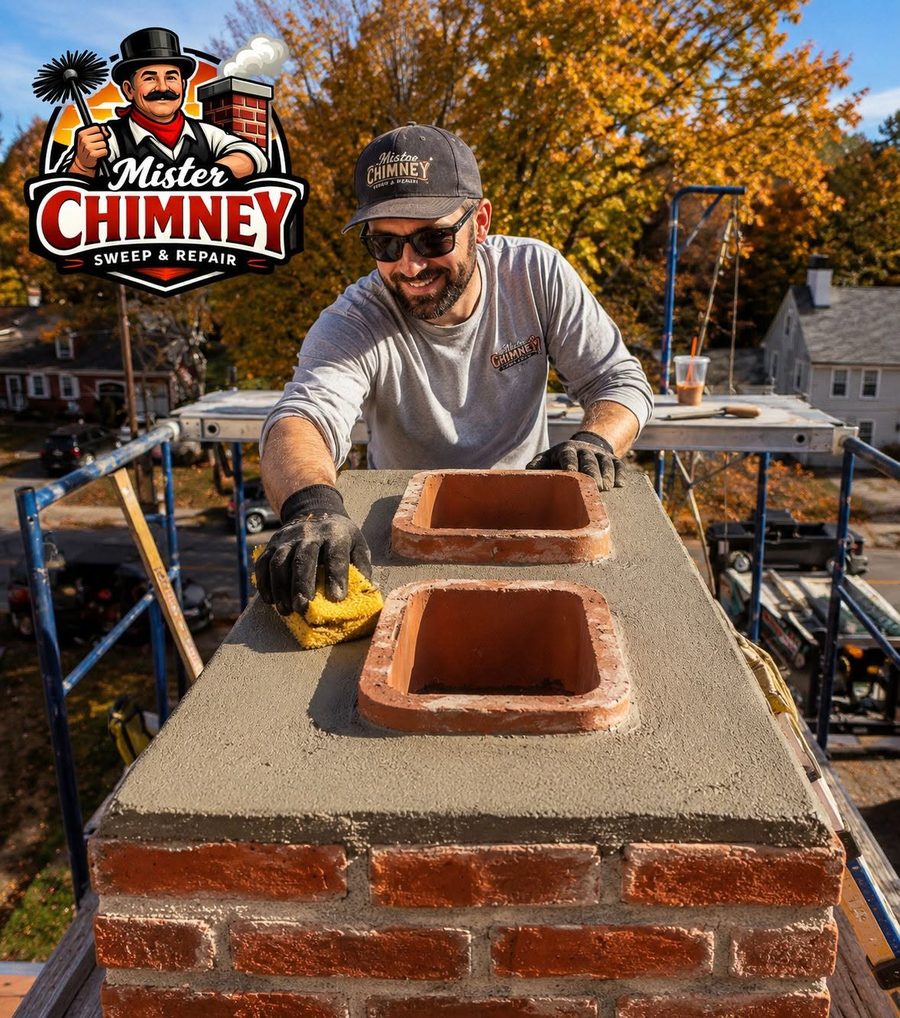
Repairing or rebuilding the top slab that sheds water off the chimney.
Learn about Chimney Crown RepairKeep reading
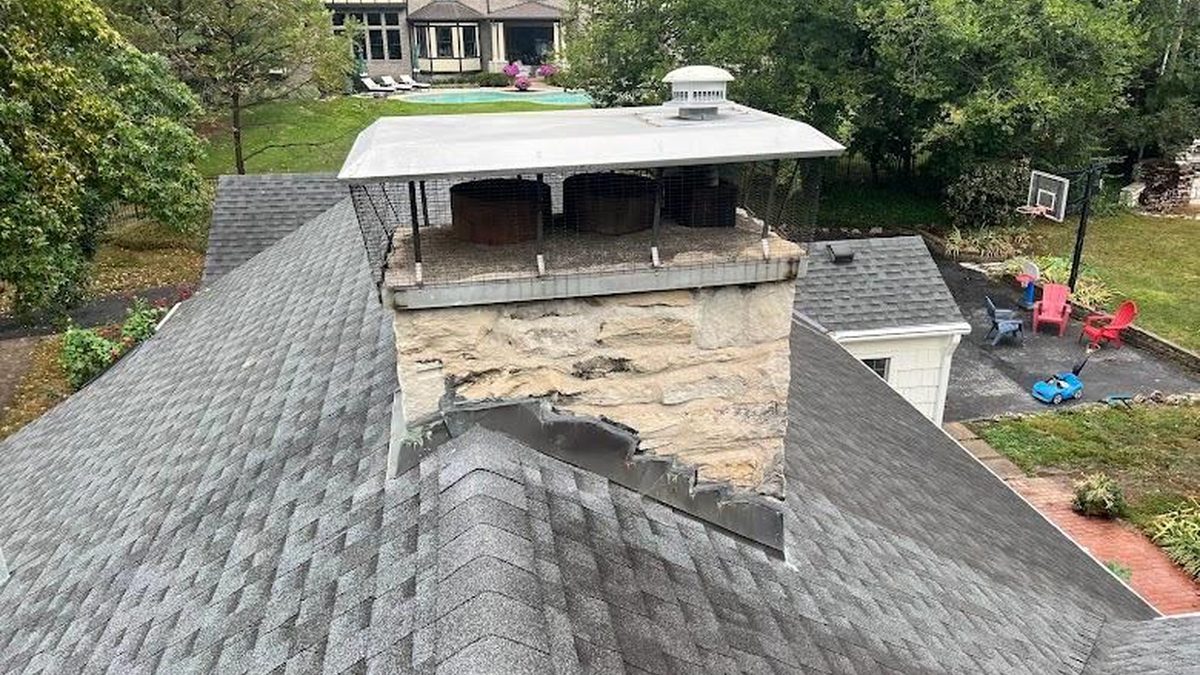
Learn why chimney leaks can be difficult to trace, what homeowners can safely observe, and how a condition-focused evaluation identifies the likely source.
Learn how chimney flashing helps manage water at the roofline, the warning signs to notice, and why a visible stain may not show the source.
After a heavy rain or windstorm, learn what homeowners can safely observe around a chimney or fireplace and when to schedule a professional evaluation.
Get in touch
Tell us about your chimney or fireplace and the best number to reach you. Full name, phone, and ZIP are required.